Reading the Body Before the Blood Test: Japan's Ancient Diagnostic Arts as Modern Preventive Medicine
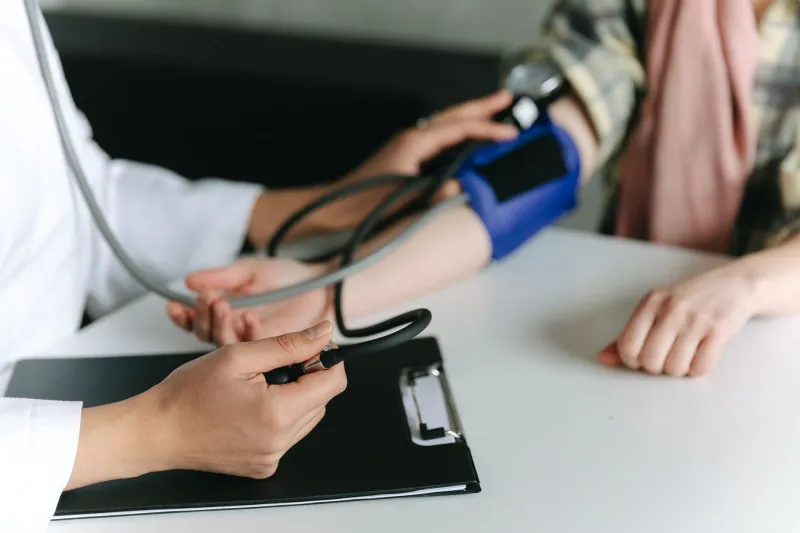
A standard annual physical in the United States follows a familiar script. Blood pressure, cholesterol, blood glucose, perhaps a few imaging studies if risk factors warrant them. The results arrive days later, interpreted against reference ranges established for large populations. If your numbers fall within those ranges, you are told you are healthy. If they do not, a treatment protocol begins. What happens in the space between — the long, often years-long period during which the body is trending toward dysfunction but has not yet crossed any measurable threshold — remains largely unaddressed.
This diagnostic gap is not a new problem. It is, however, one that Japanese traditional medicine spent centuries designing tools to fill.
The Philosophy of Pattern Recognition
The diagnostic traditions of Japanese medicine — derived in part from classical Chinese medicine but refined over centuries into distinctly Japanese clinical forms — are built on a different premise than their Western counterparts. Rather than searching for a specific pathogen or measurable biomarker, Japanese diagnostic methods seek to identify patterns of imbalance within the body's overall functional landscape. The goal is not to name a disease but to recognize the terrain in which disease is beginning to take root.
This orientation toward pattern rather than pathology gives Japanese diagnostic arts their distinctive preventive character. A practitioner trained in these methods is not waiting for the body to fail. They are reading the body's ongoing conversation with itself — looking for the early, subtle signs that something is shifting before that shift becomes a crisis.
Hara Diagnosis: The Abdomen as a Window
Of the various diagnostic methods within Japanese traditional medicine, hara diagnosis — the systematic palpation of the abdomen — is perhaps the most distinctly Japanese. While abdominal assessment exists in many medical traditions, the Japanese refinement of this practice, particularly within the context of Kampo medicine and acupuncture, is unusually systematic and clinically detailed.
In hara diagnosis, the practitioner maps specific regions of the abdomen to corresponding organ systems and meridian pathways. They assess not just tenderness or rigidity but the quality of tissue tone — whether an area feels hollow or full, resilient or slack, warm or cool relative to surrounding tissue. These distinctions, which require years of training to interpret reliably, are understood to reflect the functional status of internal systems in ways that can precede measurable changes in laboratory values by months or even years.
For American patients, the experience of hara diagnosis is often surprising. Many report that the practitioner identifies areas of sensitivity or tension that they had not consciously registered, sometimes corresponding to organ systems with which they have a known history. The sensation is less of being examined and more of being listened to — an experience that stands in notable contrast to the efficiency-driven pace of conventional clinical encounters.
At Nishino Central Wellness, hara assessment is integrated into our intake process for patients presenting with chronic or recurring conditions, providing a baseline that is revisited as treatment progresses.
Pulse Reading: More Than a Heart Rate
Pulse diagnosis in Japanese medicine bears little resemblance to the brief wrist check that precedes a blood pressure reading in a conventional clinic. In the Japanese tradition, the practitioner places three fingers along the radial artery of each wrist and assesses not a single measurement but a constellation of qualities: depth, speed, strength, rhythm, and texture. Each finger position is associated with different organ systems, and subtle variations in pulse character at each position are interpreted as indicators of functional health.
Modern physiologists have confirmed that arterial pulse waveforms do carry information beyond heart rate — information about vascular elasticity, cardiac output, and autonomic tone. The challenge is that the interpretive framework used in Japanese pulse diagnosis extends well beyond what current biomedical instrumentation is designed to measure. This does not make the practice invalid. It makes it difficult to validate through conventional research methods, which has historically led to its dismissal in Western medical literature.
That dismissal is beginning to soften. Researchers in Japan, South Korea, and increasingly in the United States have begun developing pulse analysis technologies that attempt to quantify the qualitative distinctions traditional practitioners have long relied upon. Early results suggest that experienced pulse diagnosticians are detecting hemodynamic variations that correlate with clinically relevant physiological states — including early-stage inflammatory conditions and autonomic dysregulation.
Tongue Assessment: A Surface That Tells a Story
The tongue is one of the few internal tissues directly visible without instrumentation, and Japanese traditional medicine has made extensive use of that accessibility. Tongue diagnosis evaluates color, coating, shape, moisture, and the distribution of any visible changes across specific regions of the tongue's surface, each of which is mapped to particular organ systems.
A pale, swollen tongue with a thick white coating tells a different story than a red, dry tongue with a thin or absent coating. A tongue with scalloped edges along its sides — indentations left by the teeth — is interpreted as a sign of fluid retention and digestive weakness. These visual distinctions are not arbitrary. Many have plausible physiological correlates: tongue color reflects peripheral circulation and oxygenation; coating reflects digestive microbial activity and gastric function; moisture reflects hydration status and autonomic balance.
For American patients seeking to understand their health in more nuanced terms than standard lab panels provide, tongue and pulse assessment offer a different kind of information — a qualitative picture of the body's current functional state that complements rather than competes with quantitative biomedical data.
The Case for Early Detection Beyond the Lab
America's healthcare system is extraordinarily capable of treating established disease. It is considerably less capable of preventing it. The chronic disease burden in the United States — driven largely by conditions that develop over years or decades before becoming clinically apparent — represents both a human and economic crisis that early detection strategies have so far failed to adequately address.
Japanese diagnostic traditions offer a model of early detection that is low-cost, non-invasive, and grounded in decades of refined clinical observation. They are not a replacement for laboratory medicine. They are a complement to it — a way of seeing the body's trajectory before that trajectory shows up in measurable numbers.
At Nishino Central Wellness, we believe that genuine preventive care requires more than annual bloodwork. It requires the kind of attentive, whole-body assessment that Japanese medicine has been developing for centuries. For health-conscious Americans ready to look beyond the standard panel, these ancient diagnostic arts may represent one of the most practical investments in long-term wellness available today.