The Art of True Rest: Ancient Japanese Sleep Practices That Outperform Every Modern Solution
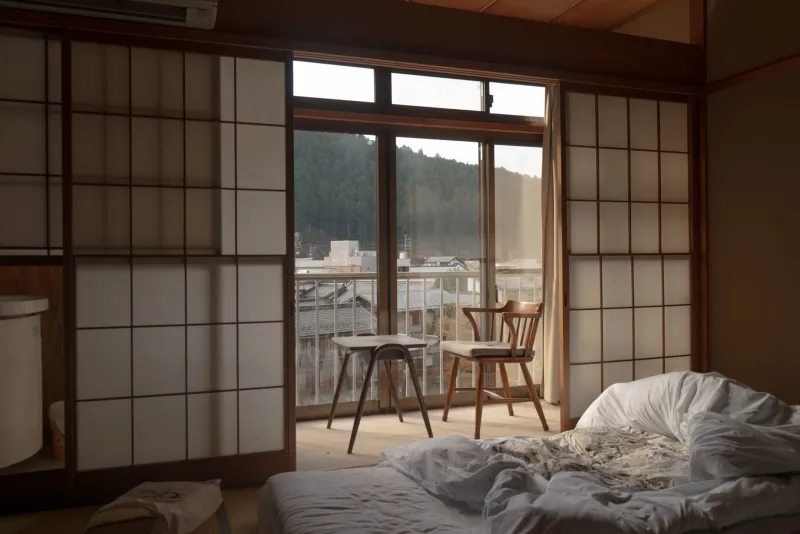
The American sleep industry is now worth over $100 billion annually. Smart mattresses monitor movement. Wearable devices score sleep stages. Supplements line pharmacy shelves promising deeper rest through melatonin, magnesium, ashwagandha, and an expanding catalogue of botanical candidates. And yet, by nearly every available measure, Americans are sleeping worse than they were a generation ago.
Approximately one in three American adults reports regularly not getting enough sleep. Insomnia affects an estimated 70 million people. Chronic sleep deprivation has been linked to cardiovascular disease, metabolic dysfunction, cognitive decline, and compromised immune function. The solutions being offered are increasingly sophisticated. The results are not.
Japanese sleep tradition offers a different diagnosis: the problem is not that Americans lack the right tools. It is that they have forgotten what sleep actually requires of the body — and have built a nightly environment that works against those requirements at nearly every level.
What Pre-Modern Japan Understood About Rest
Before the advent of artificial lighting and climate control, Japanese domestic life was organized around a profound sensitivity to seasonal and environmental conditions. Sleep was not treated as a fixed biological function that occurred independently of context. It was understood as something the body needed to be prepared for — a state that required the right physical environment, the right thermal conditions, and the right transition from waking activity.
This was not philosophy. It was practical household knowledge, passed through generations and embedded in the material culture of Japanese domestic life. The type of bedding used changed with the season. The timing of the evening bath was calibrated not for cleanliness but for its effect on body temperature. The evening meal was structured to support digestion before the body was asked to rest. Rooms were kept cool, simply furnished, and oriented to minimize disruptive sensory input.
These practices were not arbitrary customs. They were functional adaptations to a biological reality that modern sleep science has spent decades rediscovering.
The Temperature Principle
Of all the mechanisms that govern sleep onset and quality, core body temperature regulation is among the most important — and among the most routinely disrupted in contemporary American life.
The body's natural sleep initiation process involves a measurable drop in core temperature, typically beginning in the early evening hours. This thermal shift is a neurological signal: the brain interprets falling core temperature as a cue to increase melatonin production and transition toward sleep. Anything that impedes this temperature drop — a warm environment, vigorous late-evening exercise, or a hot shower taken immediately before bed — can delay or impair that transition.
Japanese bathing tradition, specifically the practice of the evening ofuro (hot bath), is often misunderstood in this context. The bath is not taken immediately before sleep. It is taken one to two hours beforehand, so that the body's subsequent heat dissipation — the cooling that follows immersion in hot water — coincides with the natural thermal decline that the body needs to initiate sleep. The bath creates the conditions for better sleep not by warming the body but by accelerating the cooling that follows.
This is a precise and clinically meaningful distinction. At Nishino Central Wellness, we frequently advise patients struggling with sleep onset to adjust the timing of their evening shower or bath using this principle — and the results are often immediate and significant.
Seasonal Attunement and Bedding
Modern American bedrooms are climate-controlled to a year-round temperature that many people select for comfort rather than sleep optimization. Japanese domestic tradition operated differently. Bedding — the weight, material, and layering of the futon and its coverings — was adjusted seasonally to maintain an optimal sleeping temperature that worked with, rather than against, the body's natural thermal rhythms.
In warmer months, lighter materials allowed for heat dissipation. In cooler months, heavier coverings preserved warmth without overheating. The sleeping surface itself was traditionally low to the floor, where temperatures are more stable and air circulation is more consistent.
Contemporary sleep research supports the underlying logic. The ideal sleeping environment temperature for most adults falls between 65 and 68 degrees Fahrenheit. Bedding that allows the body to regulate its own temperature — rather than a thermostat set to a single year-round setting — tends to produce more stable sleep architecture and fewer nighttime awakenings.
For American readers, the practical application does not require abandoning a bed frame or purchasing specialty bedding. It begins with the simpler question: is your sleeping environment actually cool enough, and does your bedding allow your body to self-regulate rather than simply retaining heat?
The Evening Transition
One of the most consistently overlooked aspects of Japanese sleep tradition is the deliberate structuring of the hours between waking activity and sleep. In traditional Japanese domestic life, the evening was characterized by a meaningful reduction in stimulation — quieter activity, lower light levels, and a gradual withdrawal from the social and cognitive demands of the day.
This transition period is not merely cultural preference. It reflects a genuine physiological requirement. The nervous system requires time to shift from the sympathetic activation of waking life to the parasympathetic dominance that supports restorative sleep. Abrupt transitions — working at a screen until midnight and then expecting to fall asleep immediately — are physiologically unreasonable, regardless of how tired the individual feels.
Japanese evening practices that support this transition include light stretching or gentle movement to release physical tension accumulated during the day, the preparation and consumption of a simple warm beverage (often a mild herbal tea without stimulant compounds), deliberate reduction of ambient light in the living space in the final hours before sleep, and the avoidance of cognitively demanding or emotionally activating content in the evening hours.
None of these practices requires a subscription, a device, or a supplement. They require only the recognition that the body needs to be led toward sleep, not ambushed by it.
What Sleep Trackers Cannot Measure
The proliferation of sleep tracking technology reflects a genuine desire to understand and improve rest. But there is a meaningful limitation embedded in the very premise: a device that measures sleep stages cannot tell you whether your nervous system spent the evening in a state conducive to deep rest. It can document what happened. It cannot address why.
Japanese sleep tradition is fundamentally concerned with the why — with the environmental, behavioral, and physiological conditions that determine whether deep, restorative sleep is even possible on a given night. The tracker is downstream of those conditions. Optimizing the conditions makes the tracker largely unnecessary.
At Nishino Central Wellness, we work with patients experiencing sleep difficulties to assess these upstream factors systematically: evening temperature exposure, light environment, digestive timing, autonomic nervous system regulation, and the quality of the transition between waking and sleeping states. In many cases, targeted adjustments to these variables produce improvements in sleep quality that patients had previously sought through supplements and devices without sustained success.
A Return to First Principles
The most important insight Japanese sleep tradition offers American patients is deceptively simple: the body already knows how to sleep. What it needs is an environment and a set of evening conditions that allow that knowledge to express itself.
This does not mean rejecting every modern convenience. It means understanding that no modern convenience can substitute for the fundamental physiological requirements that traditional practice — through generations of careful observation — learned to support. Temperature matters. Transition matters. Simplicity matters.
Rest is not a product. It is a practice. And it is one that Japanese tradition has been refining, quietly and effectively, for a very long time.