The Cost of Waiting: Why Japan's Walk-In Clinic Culture Holds a Mirror Up to American Healthcare
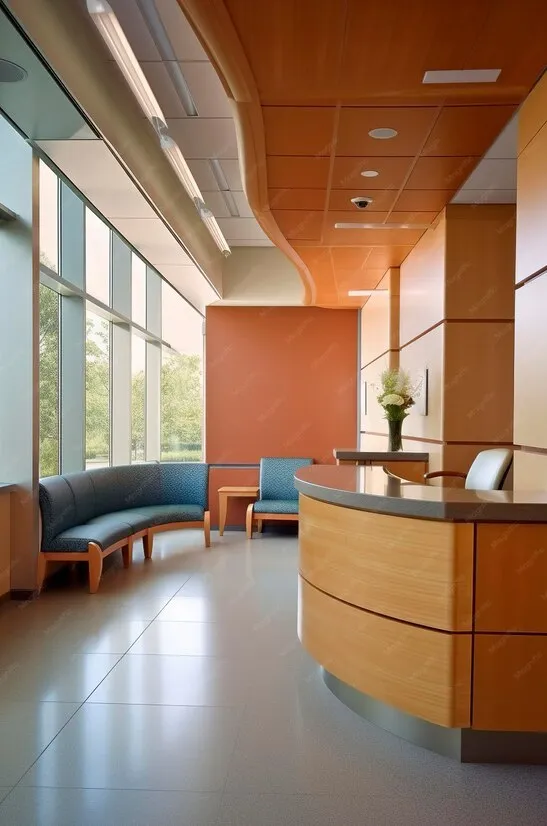
Photo: quiet modern clinic waiting room with natural light and wooden interior, via img.freepik.com
There is a particular kind of American suffering that never makes it into the medical literature: the suffering of the wait. The two weeks until the appointment opens. The month until the specialist can squeeze you in. The six hours in an emergency department for a stitch, because urgent care was closed and your GP's next opening was in March.
In Japan, this experience is largely foreign—and not because Japanese people are healthier (though they often are). It is because the structure of care is fundamentally different. Clinics in Japan operate, to a degree that would startle most American patients, on a walk-in basis. A child with an earache in the morning can typically be examined by early afternoon. A worker with persistent lower back pain can stop by a neighborhood clinic after hours without a referral letter. The barrier is not a gatekeeper; it is, at most, a short wait in a waiting room.
Access as a Clinical Variable
American medicine tends to frame access as an administrative problem—a matter of insurance networks and scheduling software. But access is also a clinical variable. Conditions caught early are cheaper, easier, and less painful to treat. A urinary tract infection addressed on day one is a course of antibiotics; addressed on day nineteen, it can become a kidney infection. The same logic applies to musculoskeletal pain, digestive complaints, and mood disorders, where early intervention dramatically changes trajectories.
When care is delayed by design—by referral requirements, prior authorizations, and appointment backlogs—the system is not neutral. It is making a clinical decision on the patient's behalf, and usually the wrong one.
What Japan Gets Structurally Right
Three features of the Japanese model stand out:
- Low thresholds for entry. Patients self-refer to appropriate clinics directly. A complaint about digestion goes to a gastrointestinal clinic; a skin issue to a dermatologist. No intermediate step exists to be cleared through.
- Predictable, transparent pricing. With national insurance and standardized fee schedules, patients know roughly what a visit costs. Fear of a catastrophic bill—the great silent deterrent of American healthcare—simply does not factor into the decision to seek care.
- Continuity through proximity. Neighborhood clinics see the same families for decades. The physician who treated your hypertension last year knows your mother's history too.
None of this requires technological wizardry. It requires a system organized around the assumption that patients should be seen promptly.
The American Reality, and Its Hidden Costs
The average wait for a new-patient physician appointment in major US metro areas now stretches well beyond three weeks, and specialist waits run longer still. Meanwhile, out-of-pocket costs remain opaque until after the visit. The predictable result: patients delay, self-treat, or simply endure. Emergency departments become the default point of entry, at ten times the cost and with none of the continuity.
There is also a subtler cost. When seeing a doctor is a project—research, referrals, insurance verification—patients learn to ration their own care. They stop bringing up the small things. And in medicine, the small things are often how the big things announce themselves.
What You Can Do Now
American patients cannot rebuild the system, but they can navigate it more strategically:
-
Ask about same-day or next-day slots. Many practices hold openings for acute complaints, but you must ask. Calling at the start of the day improves your odds considerably.
-
Use urgent care and retail clinics appropriately. For minor, time-sensitive issues, they are a reasonable bridge—far better than waiting weeks or defaulting to the ER.
-
Build a relationship before you need one. Establishing care with a primary physician while healthy makes it far easier to be seen quickly when you are not.
-
Request telehealth for follow-ups. Continuity matters more than the exam room. A fifteen-minute video check-in preserves the relationship and the record.
-
Document your symptoms while you wait. A written log of onset, triggers, and patterns turns a delayed appointment into a far more productive one.
A Different Philosophy of Timing
Japanese clinical culture reflects a simple premise: the best moment to treat a problem is when the patient notices it. American medicine, organized around gatekeeping and cost containment, has quietly inverted that premise. Until the structure changes, patients would do well to borrow the Japanese instinct—seek care early, insist on continuity, and treat the delay itself as the health hazard it is.