Why Breathing Beats Stretching: The Japanese Approach to Releasing Chronic Muscle Tension at Its Source
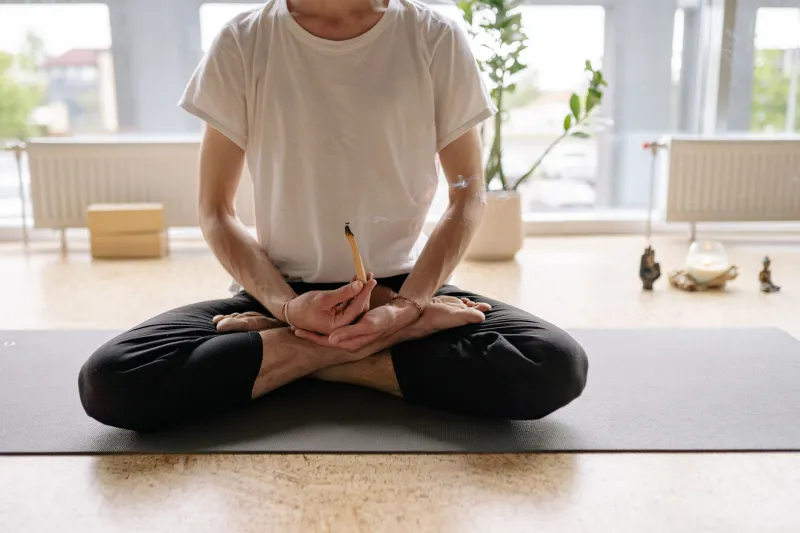
Ask any American who spends eight hours at a desk what they do when their shoulders seize up or their lower back starts to ache, and the answer is almost always the same: they stretch. They reach for the floor, roll out a yoga mat, or pull up a five-minute YouTube routine. The motion feels productive. The temporary relief feels earned. And yet, by the next morning — or the next hour — the tightness has returned, often worse than before.
This pattern is not a failure of effort. It is, according to Japanese therapeutic tradition and a growing body of neuroscience, a fundamental misunderstanding of what chronic muscle tension actually is.
The Stretch Reflex and Why Pulling Harder Often Makes Things Worse
Western physical therapy has long treated chronic tightness as a mechanical problem — a muscle that has shortened and needs to be lengthened. Stretching, in this model, is the logical intervention. Apply force, hold the position, and the tissue will eventually yield.
The difficulty is that muscle tension is not primarily a structural phenomenon. It is a neurological one. When the nervous system perceives threat — whether from physical overuse, emotional stress, postural imbalance, or accumulated fatigue — it signals the muscles to contract and guard. This is a protective response, governed by the autonomic nervous system, and it does not distinguish between a genuine danger and the chronic low-grade pressure of a demanding American work schedule.
Stretching, particularly aggressive stretching, can actually trigger the muscle spindle's stretch reflex, prompting the very tissue you are trying to release to contract further. You are, in effect, pulling against a system that is pulling back.
What Japanese Breathwork Understands That Stretching Misses
Traditional Japanese healing practices — including the meditative breathing cultivated in Zen Buddhism, the breath-centered movement principles embedded in martial arts like aikido, and techniques that parallel the ancient Indian concept of pranayama — have long operated from a different premise. In these traditions, the breath is not merely a respiratory function. It is the primary interface between the voluntary and involuntary nervous systems, and therefore the most direct available pathway to releasing tension that the mind alone cannot consciously override.
The Japanese concept of ki (気), often translated as vital energy or life force, is understood to flow through the body in ways that parallel modern descriptions of the autonomic nervous system's regulatory influence. Disrupted or constricted breath is seen not as a symptom of tension but as one of its root causes — a narrowing of the channel through which the body regulates itself.
Practitioners of Zen breathing (zazen breathwork) and related disciplines are trained to extend the exhalation significantly beyond the inhalation, to breathe into the lower abdomen (a region the Japanese call the hara), and to allow pauses of stillness between breath cycles. These are not arbitrary customs. Each element corresponds to a measurable physiological shift.
The Neuroscience Behind the Exhale
Modern research has begun to map precisely what Japanese healers observed empirically over centuries. Extended exhalation activates the parasympathetic branch of the autonomic nervous system — the system responsible for the body's rest, repair, and release functions. When the parasympathetic system is engaged, muscle guarding diminishes, cortisol levels drop, and the body's threshold for perceived threat rises. Tension that felt fixed and structural begins to dissolve without any external force being applied.
A 2017 study published in Frontiers in Human Neuroscience confirmed that slow, controlled breathing at rates of approximately six breath cycles per minute produced significant reductions in sympathetic nervous system activity and self-reported muscle tension. A 2021 review in the Journal of Neurophysiology further established that diaphragmatic breathing — breathing into the belly rather than the chest — directly reduces the excitability of motor neurons, including those responsible for maintaining chronic muscle contraction.
In other words, the exhale is doing what the stretch cannot: it is speaking to the nervous system in a language it understands and trusting that the muscle will follow.
Hara Breathing: A Practical Foundation
At Nishino Central Wellness, practitioners frequently introduce patients to hara breathing as a foundational technique for addressing chronic tension patterns, particularly those concentrated in the neck, shoulders, and lumbar region — the three areas most commonly affected by American sedentary work culture.
The practice is straightforward and requires no equipment, no dedicated space, and no more than five minutes at a time:
- Find a seated or supine position with the spine in a neutral alignment. Release any deliberate effort to hold the body upright.
- Place one hand on the lower abdomen, just below the navel. This is the hara — the body's energetic and physical center of gravity in Japanese medicine.
- Inhale slowly through the nose for a count of four, directing the breath downward so that the hand rises visibly. The chest should remain relatively still.
- Exhale through slightly parted lips for a count of seven or eight, allowing the abdomen to fall completely. Do not force the air out — let it leave as a gradual release rather than an expulsion.
- Pause for a count of two at the bottom of the exhale before the next inhale begins.
Repeat for five to ten cycles. Many patients report a noticeable softening in habitual tension areas within the first two or three rounds — a response that a brief stretching session rarely produces with equivalent reliability.
Integrating Breathwork Into an American Daily Routine
One of the most significant barriers to adopting Eastern wellness practices in the United States is the perception that they require substantial time, instruction, or lifestyle adjustment. Japanese breathwork, in its clinical application, requires none of these things in prohibitive quantities.
Hara breathing can be practiced during a commute, before a work call, immediately upon waking, or at any moment when tension begins to accumulate. Unlike stretching, it does not require a change of clothing, a cleared floor, or a specific physical environment. It is, by design, a practice that meets the practitioner wherever they are.
For patients dealing with more entrenched tension patterns — chronic neck pain, recurring tension headaches, fibromyalgia, or post-injury guarding — a structured breathwork protocol developed in consultation with a qualified integrative practitioner can serve as a core component of a broader therapeutic plan, complementing manual therapies and, where appropriate, herbal support.
A Different Question to Ask the Body
Stretching asks the body to yield to an external force. Japanese breathwork asks the body why it is holding on in the first place — and then provides the neurological conditions under which it feels safe enough to let go.
This distinction is not merely philosophical. It reflects a fundamentally different model of how chronic tension arises and what it requires to resolve. When the nervous system is the source of the problem, the nervous system must be part of the solution. The breath, as Japanese healing traditions have long understood, is the most elegant tool available for that conversation.
For Americans conditioned to treat discomfort with force and effort, this may require a genuine shift in orientation. But the evidence — both ancient and contemporary — suggests that the shift is worth making.