Catching Illness Before It Speaks: The Japanese Art of Prevention and What It Means for Your Health
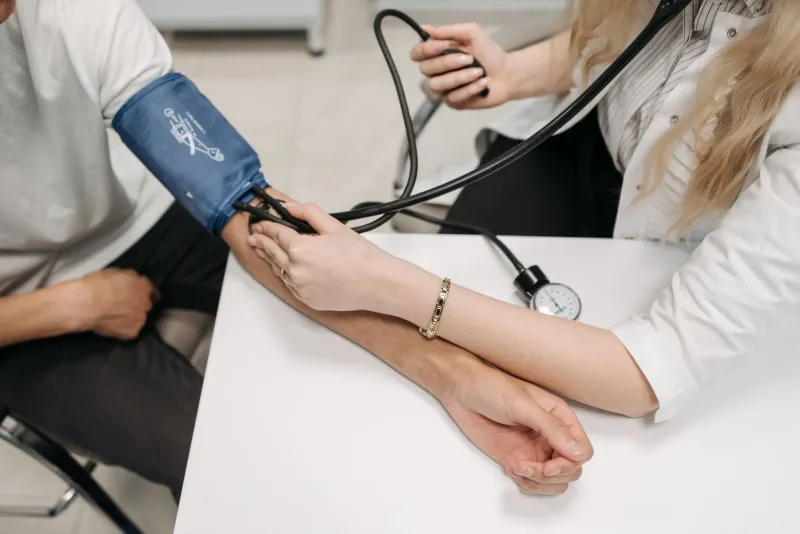
There is a phrase embedded in classical Japanese medical thought that translates, roughly, as: the superior physician treats the illness that has not yet arrived. For centuries, this principle guided practitioners across Japan to observe, assess, and intervene long before a patient could articulate any complaint. Today, at Nishino Central Wellness, that same philosophy forms the foundation of a preventive care model that is drawing increasing attention from American patients exhausted by a healthcare system that largely waits for problems to become undeniable before addressing them.
The Japanese concept at the heart of this approach is yobou — a word that encompasses prevention, but carries a depth the English translation fails to capture. Yobou is not simply the absence of disease. It is the active cultivation of conditions in which disease cannot easily take root.
A Different Starting Point
American healthcare, for all its technological sophistication, is fundamentally reactive. A patient presents symptoms. Tests are ordered. A diagnosis is rendered. Treatment begins. This sequence is so deeply normalized that most Americans assume it is the only logical sequence. But it represents only one possible model — and, according to Japanese integrative medicine, a relatively late-stage one.
The contrast becomes clear when you examine what a first appointment looks like at a clinic operating within the yobou framework. Rather than beginning with a chief complaint, the intake process at Nishino Central Wellness opens with a comprehensive postural and constitutional assessment. Practitioners evaluate spinal alignment, observe the distribution of muscular tension, and note subtle asymmetries in gait and posture that Western physical examinations rarely document. These observations are cross-referenced with meridian diagnostic techniques drawn from traditional Japanese medicine — a system that maps the body's functional pathways and identifies areas of stagnation or deficiency that may not yet have produced symptoms a patient would recognize.
The result is a clinical picture that precedes the patient's own awareness of a problem by months, sometimes years.
What Meridian Diagnostics Reveal That Standard Panels Miss
In conventional American medicine, bloodwork and imaging serve as the primary diagnostic tools. They are powerful — but they are also threshold-dependent. A biomarker must reach a certain level of abnormality before it registers as clinically significant. Structural changes must be sufficiently advanced before they appear on a scan. The patient, meanwhile, may have been experiencing subtle functional decline for years before any of this becomes measurable.
Meridian diagnostics operate on a different principle. Rooted in centuries of Japanese and broader East Asian clinical observation, these techniques assess the body's functional state through palpation, pulse quality, and the reactivity of specific anatomical points. Practitioners trained in this tradition are evaluating not just what the body is doing, but what it is struggling to do — the compensatory patterns, the areas of guarded tension, the circulation irregularities that precede structural damage.
At Nishino Central Wellness, this diagnostic layer is integrated with postural analysis and patient lifestyle interviews to construct what practitioners refer to as a functional risk profile. This is not a diagnosis of disease. It is a map of vulnerability — an evidence-informed picture of where the body is likely to develop problems if current patterns continue uncorrected.
Three Patient Profiles: Intervention Before the Crisis
The practical value of this approach becomes most visible in patient outcomes. Consider three representative cases from Nishino Central Wellness — composites drawn from the clinic's patient population, with identifying details altered for privacy.
The first is a 44-year-old logistics manager from the Chicago area who came to the clinic not because of pain, but because a colleague had encouraged him to try what she described as a "tune-up." His postural assessment revealed a pronounced anterior pelvic tilt and thoracic kyphosis consistent with years of sedentary desk work. Meridian evaluation identified stagnation along pathways associated with lumbar and renal function. He had no back pain at the time. Within eight months of beginning a corrective protocol — combining postural therapy, targeted meridian work, and lifestyle adjustments — imaging ordered by his primary care physician for an unrelated matter incidentally confirmed early degenerative changes in his lumbar spine that his orthopedist described as consistent with a patient who "would typically be presenting with significant pain within two to three years." He has remained pain-free and continues maintenance care.
The second case involves a 38-year-old teacher from the Pacific Northwest who presented with mild fatigue and occasional digestive irregularity — complaints she had dismissed as stress-related. Constitutional assessment at Nishino Central Wellness identified a pattern consistent with what Japanese medicine terms qi deficiency affecting digestive and immune function. A Kampo herbal formula was introduced alongside dietary recommendations and a structured rest protocol. Within six months, her energy had stabilized and her digestive complaints resolved. Two years later, she has not required any pharmaceutical intervention for the recurring upper respiratory infections that had previously disrupted her work schedule every winter.
The third case is a 51-year-old financial analyst whose initial visit was prompted by mild shoulder stiffness. Postural and meridian evaluation identified early cervical instability and circulatory irregularities along pathways associated with cardiovascular function. He was referred back to his cardiologist with a detailed clinical summary. Follow-up testing confirmed borderline hypertension that had not been detected at his most recent annual physical. His cardiologist credited the early referral with enabling lifestyle-based management before pharmaceutical intervention became necessary.
Lifestyle Optimization as Clinical Practice
Yobou extends beyond clinical assessment. In the Japanese preventive model, the way a person sleeps, eats, moves, and manages stress are not peripheral lifestyle factors — they are primary clinical variables. At Nishino Central Wellness, patient consultations include structured evaluation of sleep posture, dietary patterns consistent with traditional Japanese nutritional principles, movement habits, and stress physiology.
This is not wellness coaching in the casual sense. It is a clinically informed assessment of the behavioral conditions that either accelerate or retard the functional decline that precedes diagnosable disease. Recommendations are specific, graduated, and monitored across follow-up visits. Progress is tracked not through symptom resolution — because symptoms may not yet exist — but through objective improvements in postural metrics, meridian responsiveness, and patient-reported functional indicators.
Why American Patients Are Seeking This Model Now
The timing of this growing interest is not coincidental. American healthcare costs continue to rise, and a significant proportion of those costs are attributable to conditions that were preventable — or at least deferrable — had earlier intervention occurred. Chronic pain, metabolic disease, and degenerative musculoskeletal conditions together account for an enormous share of American healthcare expenditure, much of it directed at managing problems that were years in the making.
Patients arriving at Nishino Central Wellness increasingly arrive not in crisis, but in anticipation of one. They are professionals in their thirties, forties, and fifties who have watched parents or colleagues navigate expensive, disruptive medical interventions and who are asking a reasonable question: is there a way to see this coming earlier?
The Japanese medical tradition has been answering that question for centuries. The answer, it turns out, is yes — but it requires a willingness to engage with the body before it demands attention, to treat subtle signals as meaningful data, and to accept that the most effective moment to address illness is the moment before it has a name.
At Nishino Central Wellness, that moment is where care begins.