Why Warmth Wins: Rethinking Chronic Pain Through the Lens of Japanese Thermal Healing
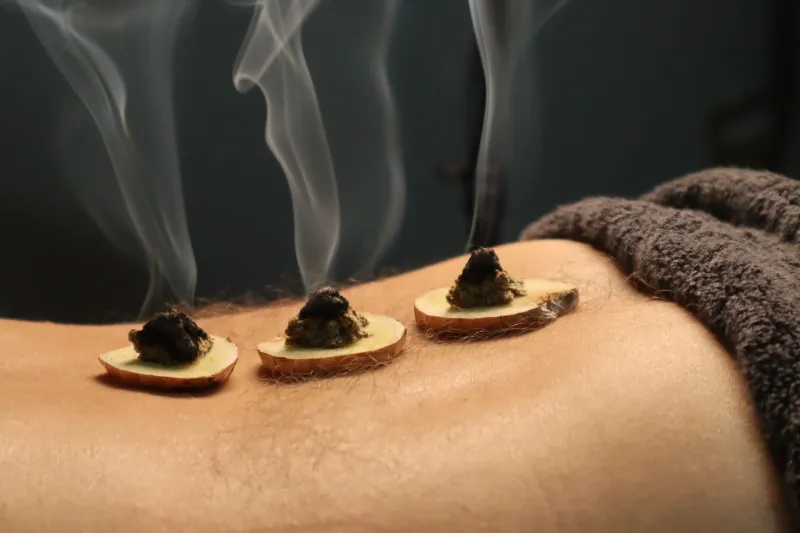
There is a moment familiar to millions of American patients: the injury occurs, the ice pack appears, and the instruction follows — twenty minutes on, twenty minutes off. It is a protocol so deeply embedded in Western sports medicine and general practice that questioning it can feel almost heretical. Yet across the Pacific, Japanese therapeutic traditions have, for centuries, operated on a fundamentally different assumption: that cold contracts, stagnates, and ultimately prolongs suffering, while warmth opens, circulates, and heals.
At Nishino Central Wellness, this philosophical divergence is not merely academic. It is the foundation of a clinical approach that is offering measurable relief to patients who have cycled through conventional cold-therapy regimens without resolution.
The Ice Doctrine and Its Limits
The widespread adoption of ice therapy in American medicine traces back largely to the RICE protocol — Rest, Ice, Compression, Elevation — a framework popularized in the 1970s and applied broadly ever since. Its logic is intuitive: cold reduces swelling, numbs acute pain, and slows local metabolic activity. For certain acute injuries in the immediate aftermath of trauma, this rationale holds meaningful value.
However, the evidence base for ice as a chronic pain intervention has grown increasingly complicated. A growing body of peer-reviewed research, including a widely cited 2021 review in the Journal of Emergency Medicine, has questioned whether aggressive icing may actually delay tissue repair by suppressing the very inflammatory cascade that initiates healing. The body's inflammatory response, long villainized in popular health culture, is now understood to be an essential biological process — one that recruits repair cells, removes cellular debris, and orchestrates tissue regeneration.
When that process is repeatedly suppressed, the healing timeline may extend rather than compress. For patients with chronic musculoskeletal conditions — persistent lower back pain, fibromyalgia, osteoarthritis, or long-standing tendinopathy — the clinical picture is often one of stagnation rather than acute inflammation. Applying cold to an already stagnant system, many practitioners argue, compounds the problem.
Ki, Circulation, and the Japanese Concept of Thermal Balance
Traditional Japanese medicine approaches pain through an entirely different conceptual framework. Central to this framework is the concept of ki — the vital energy that flows through the body along a network of meridians. Health, in this model, is not merely the absence of disease but the unobstructed, balanced movement of ki through these channels.
Cold, in Japanese therapeutic philosophy, is understood as a force that causes contraction and stagnation. When ki cannot circulate freely — whether due to injury, emotional stress, or environmental cold — pain and dysfunction follow. The therapeutic imperative, therefore, is not suppression but restoration of flow.
This is where warmth becomes medicine.
Practices such as moxibustion — the burning of dried mugwort herb near or on specific acupuncture points — have been used in Japan for well over a thousand years to introduce therapeutic heat into the body's meridian system. Unlike surface-level warming pads, moxibustion is understood to penetrate deeply, stimulating specific points that correspond to organ systems and pain pathways. Modern infrared thermography studies have confirmed that moxibustion produces measurable temperature changes not only at the point of application but along corresponding meridian pathways — a finding that continues to intrigue researchers in integrative medicine.
Beyond moxibustion, Japanese clinical practice incorporates onnetsu therapy (far-infrared thermal application), warm compress protocols using herbal preparations, and specific forms of shiatsu designed to generate internal heat through sustained pressure and movement.
What Happens Physiologically When We Choose Warmth
From a modern physiological standpoint, sustained therapeutic warmth produces a cascade of effects that align closely with what Japanese practitioners have long described in terms of ki restoration.
Heat application increases local blood perfusion, delivering oxygen and immune cells to chronically underperfused tissues. It reduces muscle spindle activity, decreasing the involuntary guarding and spasm that frequently amplify pain signals. It improves the extensibility of collagen-rich connective tissues, making joints and tendons more responsive to rehabilitation. And, critically, it supports the parasympathetic nervous system — the branch of the autonomic nervous system responsible for rest, repair, and recovery — rather than triggering the sympathetic stress response that cold shock can provoke.
For patients whose chronic pain exists within a broader context of nervous system dysregulation — a category that encompasses a substantial portion of individuals living with fibromyalgia, complex regional pain syndrome, and stress-related musculoskeletal disorders — this parasympathetic support may be as therapeutically significant as any localized tissue effect.
Clinical Perspectives from Nishino Central Wellness
Practitioners at Nishino Central Wellness encounter this pattern with notable regularity. Patients arrive having diligently followed conventional cold-therapy protocols for months or years, often with diminishing returns. Many report that ice provides short-term numbing but leaves them feeling stiffer and more restricted in the hours that follow.
The clinical team at our facility approaches these cases with an initial assessment of the patient's overall thermal constitution — a concept that has no direct equivalent in conventional Western diagnostics but maps meaningfully onto modern understandings of autonomic tone and peripheral circulation. Patients presenting with cold extremities, chronic muscle tightness, and pain that worsens in air-conditioned environments or during winter months are frequently identified as candidates for warming-based protocols.
Treatment plans typically integrate moxibustion with acupuncture, targeted shiatsu, and — where appropriate — patient education on dietary and lifestyle factors that support internal warmth according to both Japanese and evidence-based nutritional frameworks. The goal is not simply symptom suppression but the restoration of the body's own capacity to regulate, circulate, and repair.
Results, while they vary by individual and condition, have been encouraging. A number of patients who had not experienced meaningful relief from years of ice therapy, anti-inflammatory medications, and physical therapy have reported significant reductions in pain intensity and improvements in daily function after completing warming-based integrative protocols at our clinic.
Challenging the American Default
None of this is to suggest that cold therapy is without merit. For acute traumatic injuries — a freshly sprained ankle, a contusion sustained in sport — appropriately timed cold application retains a legitimate clinical role. The issue lies in the unreflective extension of acute-injury protocols into the management of chronic pain conditions that operate by entirely different physiological mechanisms.
Japanese medicine has never made this conflation. Its therapeutic logic has always distinguished between the acute and the chronic, the excess and the deficient, the hot and the cold — and matched its interventions accordingly.
At Nishino Central Wellness, we believe that American patients deserve access to this more nuanced framework. Chronic pain is not a monolithic condition requiring a single universal response. It is a complex, individualized phenomenon — one that sometimes calls for cooling, but far more often, particularly in its most persistent forms, calls for the ancient, evidence-supported wisdom of warmth.
If you have been living with chronic pain and have not found lasting relief through conventional approaches, we invite you to explore what Japanese thermal medicine may offer. The answers, it turns out, may have been hiding in plain warmth all along.