Heat, Healing, and High Performance: How Moxibustion Is Entering the American Sports Medicine Conversation
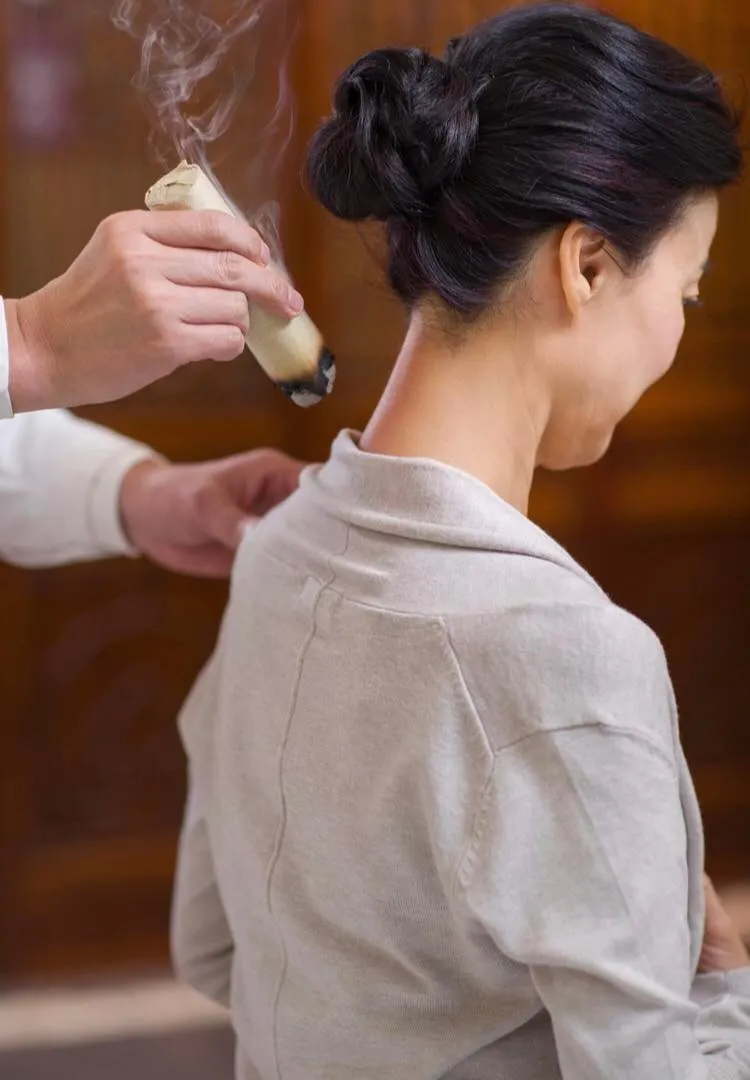
Photo: moxibustion treatment athlete sports recovery clinic, via www.naturalactive.co.uk
A Thousand-Year-Old Technique Finds a New Arena
Long before foam rollers and cryotherapy chambers became fixtures in professional locker rooms, Japanese healers were applying smoldering cones of dried mugwort — known as moxa — to specific points on the body to stimulate circulation and restore balance. This practice, called moxibustion, has been documented in Japanese and Chinese medical texts for over two millennia. Today, it is finding an unlikely new audience: competitive athletes and the sports medicine professionals who care for them.
At Nishino Central Wellness, we have observed firsthand how interest in this modality has grown among patients who are not simply seeking relief from chronic pain, but who are actively pursuing faster, more complete recovery from training stress and sports-related injuries. The question practitioners and athletes are now asking is not whether moxibustion has a cultural heritage worth respecting — it clearly does — but whether it has a physiological basis worth investigating. Increasingly, the evidence suggests it does.
What Moxibustion Actually Does to the Body
Moxibustion involves the combustion of Artemisia argyi, commonly called mugwort, either directly on the skin or held just above acupuncture points. The resulting heat penetrates superficial tissue and, according to both traditional theory and emerging biomedical research, triggers a cascade of responses that extend well beyond simple warmth.
Studies published in peer-reviewed journals have identified several mechanisms that may explain moxibustion's therapeutic effects in a sports medicine context. The localized thermal stimulation appears to increase microcirculation in treated areas, facilitating the clearance of metabolic waste products such as lactic acid that accumulate during intense exercise. Additionally, research has indicated that moxa treatment may modulate levels of pro-inflammatory cytokines — the chemical messengers that, when overproduced, contribute to prolonged soreness, joint stiffness, and delayed-onset muscle fatigue.
One mechanism receiving particular attention is the activation of heat shock proteins (HSPs). These cellular proteins, triggered by thermal stress, play a protective role in muscle fiber repair and have been linked to enhanced recovery times following eccentric exercise — the type of muscle contraction most commonly associated with post-workout soreness.
Sports Medicine Practitioners Weigh In
Dr. Melissa Tanaka, a sports medicine physician practicing in Portland, Oregon, began integrating moxibustion into her clinic's recovery protocols after observing its effects on a small cohort of marathon runners. "I was skeptical at first," she acknowledged in a recent interview. "But when I started reviewing the patients' self-reported recovery scores alongside their return-to-training timelines, the data was genuinely interesting. Several athletes who had previously struggled with recurring hamstring tightness reported significant reductions in recovery time."
Her experience is not isolated. Certified athletic trainers at several NCAA Division I programs have quietly begun exploring moxa as a complement to conventional modalities such as ice therapy, electrical stimulation, and soft tissue mobilization. The appeal, many note, lies partly in its non-invasive nature and the absence of pharmaceutical side effects — a consideration that carries considerable weight in regulated athletic environments where substance protocols are strictly monitored.
Kevin Reyes, a licensed acupuncturist and certified athletic trainer working with a semi-professional soccer club in the Pacific Northwest, describes moxibustion as "a tool that does something cold therapy simply cannot — it brings circulation toward the injury rather than suppressing it." He uses indirect moxa — where the burning herb is held above the skin rather than placed directly on it — on athletes dealing with chronic muscle fatigue and joint discomfort related to overuse.
Bridging Traditional Rationale with Contemporary Physiology
One of the challenges in presenting moxibustion to mainstream sports medicine audiences is the language divide between traditional Japanese medical theory and biomedical terminology. Traditional practitioners describe moxibustion as tonifying ki (the Japanese rendering of qi), warming meridians, and dispersing cold-type stagnation. While these concepts carry deep clinical meaning within their original framework, they require translation for practitioners trained in Western physiology.
At Nishino Central Wellness, our integrative approach involves presenting both frameworks simultaneously — honoring the traditional rationale while situating it alongside contemporary explanations. When a patient understands that "warming a meridian" corresponds, in part, to increasing regional blood flow and reducing vascular resistance, the therapy becomes more accessible without being stripped of its cultural integrity.
This dual framing is proving effective with athletes, who tend to be pragmatic consumers of health information. They want to know what a treatment does, how long it takes, and whether it will interfere with their training schedule. Moxibustion, in most applications, scores well on all three counts: sessions typically last between 20 and 40 minutes, thermal effects are localized and controlled, and there is no recovery period that would prevent same-day light training.
Practical Considerations for Athletes Considering Moxa Therapy
For athletes and coaches exploring moxibustion as part of a recovery strategy, several practical points are worth addressing. First, the therapy is most appropriately administered by a licensed acupuncturist or integrative medicine practitioner with specific training in moxibustion techniques. Self-administration of direct moxa carries a risk of burns and is not recommended without clinical supervision.
Second, moxibustion is best understood as a complementary modality rather than a standalone treatment. Its greatest value in sports medicine contexts appears to emerge when it is integrated with other evidence-based recovery strategies, including adequate sleep, nutritional support, and structured physical rehabilitation.
Third, athletes with certain conditions — including active skin infections, fever, or specific cardiovascular considerations — should consult with their primary care provider before beginning moxa therapy. A thorough intake evaluation, such as the one conducted at Nishino Central Wellness, ensures that treatment is appropriately tailored to each individual's health profile.
A Recovery Tradition Worth Taking Seriously
Moxibustion will not replace the ice bath or the compression sleeve in the American sports recovery toolkit. What it offers, however, is something distinct: a thermally active, circulation-enhancing modality with a documented history of clinical use and a growing body of biomedical research supporting its mechanisms. As integrative approaches to athletic care continue to gain legitimacy in the United States, moxibustion stands as one of the more compelling bridges between Japanese healing tradition and the demands of modern competitive sport.
For athletes who have plateaued with conventional recovery methods, or who are seeking a more comprehensive approach to managing training load and tissue health, this ancient practice may represent a genuinely useful addition to their regimen — one that Nishino Central Wellness is well-positioned to provide within a carefully supervised clinical environment.