Before Shiatsu, There Was Anma: Rediscovering Japan's Original Therapeutic Touch in American Wellness Clinics
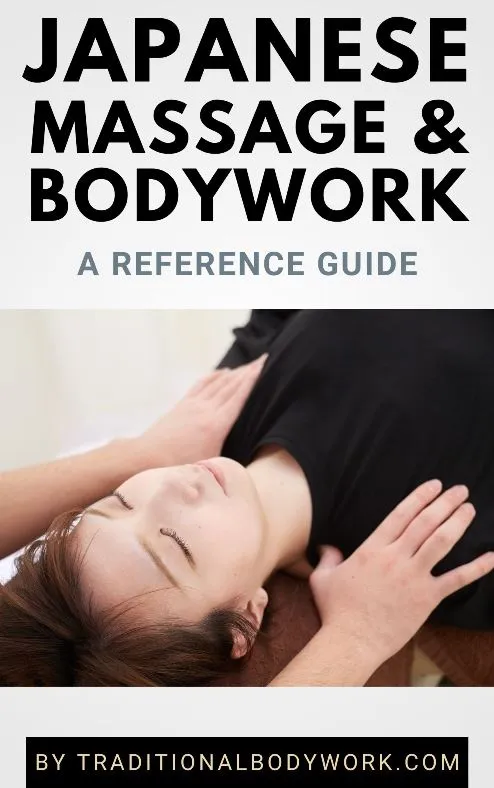
Photo: traditional Japanese Anma massage therapy wellness clinic practitioner, via www.traditionalbodywork.com
The Ancestor in the Room
Most Americans who have encountered Japanese bodywork have done so through shiatsu — the finger-pressure technique that became internationally recognized during the latter half of the twentieth century. Fewer are aware that shiatsu itself descends from a far older practice: Anma, a structured form of therapeutic massage that arrived in Japan from continental Asia over fourteen centuries ago and was systematized by Japanese practitioners into a sophisticated clinical discipline long before Western medicine established its first footholds on Japanese soil.
At Nishino Central Wellness, we find that patients who arrive with some familiarity with shiatsu or traditional Japanese healing are often surprised to learn that Anma exists as a distinct modality — one with its own technical vocabulary, theoretical framework, and clinical applications. As interest in integrative and non-pharmaceutical wellness approaches continues to grow across the United States, Anma is attracting renewed attention from both practitioners seeking to expand their therapeutic repertoire and patients looking for something more historically grounded than the hybrid modalities that currently populate the wellness market.
What Distinguishes Anma from Other Japanese Bodywork
The word Anma (按摩) combines two Chinese characters meaning "to press" and "to rub" — a description that hints at the technique's foundational movements without fully capturing their sophistication. Unlike shiatsu, which focuses primarily on sustained perpendicular pressure applied to specific acupuncture points, Anma employs a broader vocabulary of strokes, including effleurage-like gliding movements, rhythmic percussion, kneading of muscle bellies, and passive joint mobilization.
This diversity of technique gives Anma a distinctly different therapeutic character. Where shiatsu tends toward stillness and depth, Anma is more dynamic — a flowing sequence of manipulations designed to stimulate the nervous system, mobilize soft tissue, and encourage circulation throughout the treated region. Traditional Anma theory organizes the body into treatment zones corresponding to meridian pathways, but the application is less point-specific than shiatsu and more oriented toward the overall functional state of muscle groups and connective tissue.
It is also worth noting that Anma was historically practiced as a medical discipline in Japan, not merely a comfort service. Blind practitioners, who were granted professional licensing rights by the Tokugawa government in the seventeenth century, occupied a respected clinical role. The therapeutic ambitions of Anma — addressing musculoskeletal dysfunction, circulatory sluggishness, and nervous system dysregulation — were never incidental to its practice.
Why American Physical Therapists Are Taking Notice
The current interest in Anma among US-based physical therapists and bodywork practitioners reflects several converging trends. First, there is growing professional appetite for manual therapy techniques that can address soft tissue dysfunction through means other than deep tissue manipulation, which, while effective, carries a higher risk of post-treatment soreness and is not appropriate for all patient populations.
Second, the rhythmic, systematized nature of Anma aligns well with the protocol-driven culture of physical therapy practice. Unlike some intuitive bodywork traditions that resist standardization, Anma has a codified sequence of techniques that can be taught, assessed, and documented — qualities that facilitate integration into clinical settings where consistency and reproducibility matter.
Dr. Sandra Okonkwo, a physical therapist and integrative medicine specialist based in Chicago, began incorporating Anma-derived techniques into her neurological rehabilitation practice after completing a continuing education course in traditional Japanese bodywork. "What struck me immediately was how well the rhythmic compression sequences worked for patients with heightened muscle tone," she noted. "The nervous system response was different from what I observed with conventional manual therapy — calmer, more graduated."
Her observations align with emerging research on the neurophysiological effects of rhythmic manual stimulation, which suggests that regular, predictable tactile input can modulate sympathetic nervous system activity and reduce the perception of pain — mechanisms highly relevant to patients managing chronic musculoskeletal conditions.
Licensing, Training, and Professional Pathways in the US
One of the more complex aspects of Anma's integration into American wellness practice is the question of licensure. In Japan, Anma practitioners are licensed under a distinct regulatory framework that is separate from acupuncture and moxibustion credentials. In the United States, no equivalent standalone license for Anma exists at the federal level, and state-by-state regulations governing massage therapy vary considerably.
Most American practitioners who offer Anma do so under the umbrella of their existing massage therapy or acupuncture licensure, supplemented by specialized training in traditional Japanese bodywork. Several continuing education programs and professional organizations now offer Anma-specific curricula, and the number of practitioners listing Anma among their clinical offerings has grown noticeably over the past decade.
For patients seeking Anma treatment, it is advisable to inquire specifically about a practitioner's training background and clinical experience with the modality. At Nishino Central Wellness, we maintain transparent records of our practitioners' training credentials and are happy to discuss the specific techniques that will be employed during any given treatment session. Informed consent and patient education are central to our approach.
Who Benefits Most from Anma Therapy
Anma's clinical versatility makes it applicable across a relatively wide range of patient presentations. Those who tend to respond particularly well include individuals managing chronic muscular tension related to occupational stress, patients in the early stages of neurological rehabilitation who require gentle but systematic soft tissue stimulation, older adults seeking improved circulation and joint mobility without the intensity of deep tissue work, and individuals who have found conventional massage therapy either overly aggressive or insufficiently structured for their needs.
Anma is also well suited to patients who are new to manual therapy and may benefit from a more gradual introduction to therapeutic touch. The sequential, systematic nature of a traditional Anma session provides a sense of procedural clarity that many patients find reassuring — particularly those who have experienced anxiety or discomfort during less structured bodywork treatments.
As with any manual therapy, Anma is contraindicated in certain circumstances, including acute inflammatory conditions, open wounds, active infections, and specific cardiovascular presentations. A comprehensive intake evaluation is an essential first step before any Anma treatment is initiated.
Reclaiming a Tradition, Responsibly
The revival of Anma in American clinical practice raises legitimate questions about cultural stewardship. As Japanese healing traditions gain mainstream visibility in the United States, there is an ongoing professional responsibility to ensure that these modalities are represented accurately — not rebranded beyond recognition or stripped of the theoretical frameworks that give them coherence.
At Nishino Central Wellness, our commitment to Japanese healing traditions is not merely aesthetic. It reflects a genuine belief that the depth of these practices — their clinical logic, their historical development, their philosophical underpinnings — is precisely what makes them valuable. Anma is not simply a set of massage strokes. It is a systematic approach to the human body that has been refined over centuries of clinical observation, and it deserves to be offered with that heritage intact.
For American patients navigating an increasingly crowded wellness landscape, Anma represents something relatively rare: a modality that is simultaneously ancient and evidence-adjacent, culturally specific and broadly accessible, gentle in application and substantive in effect. That combination, we believe, is well worth exploring.