Four Seasons, One Body: How Japanese Seasonal Medicine Keeps Americans Healthy Year-Round
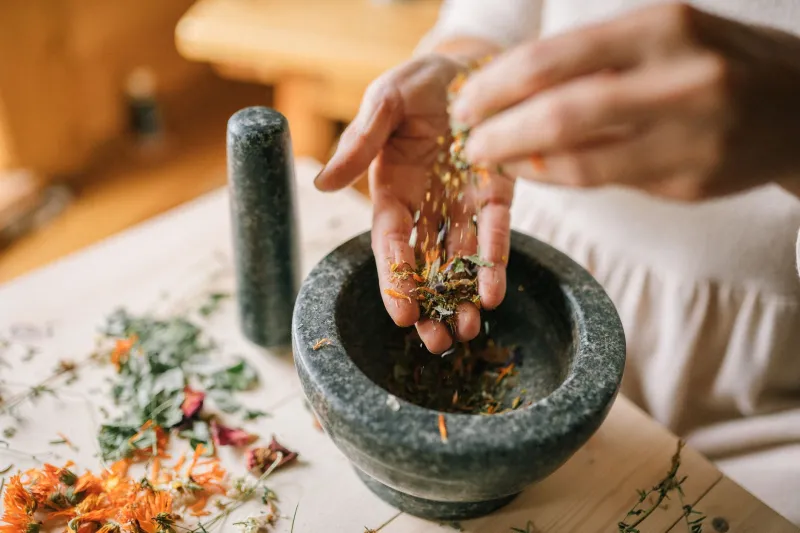
Most Americans treat health as a fixed target — a baseline to be maintained regardless of weather, daylight, or the turning of leaves. We eat the same foods in January that we eat in July. We keep our thermostats steady, our schedules uniform, and our supplement routines largely unchanged from one month to the next. Yet the body is not a static system. It breathes with the world around it.
Japanese traditional medicine has long understood this truth. Rooted in classical Chinese medical theory and refined over centuries of practice on the Japanese archipelago, this system treats the body as a living expression of its environment — one that must be supported differently in spring than in autumn, and differently again in the deep cold of winter. At Nishino Central Wellness, this seasonal philosophy forms a cornerstone of how we approach integrative care for our patients throughout the year.
The Philosophy Behind Seasonal Medicine
In Japanese traditional medicine — and in the Kampo herbal tradition that evolved from it — the year is divided not merely into weather patterns but into distinct physiological phases. Each season corresponds to specific organ systems, emotional states, dietary needs, and vulnerabilities. This is not metaphor. It is a clinical framework that practitioners have used to prevent illness, manage chronic conditions, and support the body's natural transitions for over a thousand years.
Spring, for instance, is associated with the liver and gallbladder meridian system. As the body emerges from winter's inward contraction, these systems become more active — and more prone to disruption. Patients may notice irritability, eye strain, tendon tightness, or digestive sensitivity during this period. Traditional Japanese practitioners address these patterns proactively, adjusting herbal formulas, dietary recommendations, and bodywork protocols accordingly.
Summer shifts the focus toward the heart and small intestine. The body's circulatory energy rises to its peak. Heat, both environmental and physiological, demands careful management. Practitioners in this tradition pay close attention to sleep quality, hydration, and emotional agitation — all of which are considered signs that the summer organ systems are either thriving or under stress.
Autumn and the Art of Letting Go
Perhaps no seasonal transition is more clinically significant in Japanese medicine than the shift from summer to autumn. This period corresponds to the lung and large intestine systems — organs that govern both physical respiration and, in the traditional framework, the body's capacity to process and release what it no longer needs.
For American patients, autumn often brings a recognizable cluster of complaints: respiratory sensitivity, dry skin, constipation, and a kind of emotional heaviness that does not quite meet the clinical threshold for depression but is nonetheless real and disruptive. Japanese seasonal medicine identifies these not as unrelated symptoms but as expressions of a single autumnal pattern — one that responds well to warming, moistening herbal formulas, breath-centered bodywork, and dietary adjustments that emphasize cooked, grounding foods over raw and cooling ones.
This is a meaningful departure from the American tendency to treat each symptom in isolation. A patient who visits a conventional clinic with dry skin, mild constipation, and fatigue in October may receive three separate referrals. A practitioner trained in Japanese seasonal medicine sees one coherent picture and addresses it accordingly.
Winter: The Season of Conservation
Winter, in the Japanese medical framework, belongs to the kidney and bladder systems — the organs considered responsible for the body's deepest reserves of energy, known as jing in classical theory. This is the season for turning inward, conserving resources, and avoiding unnecessary depletion.
For many Americans, winter is paradoxically one of the most demanding seasons. Holiday obligations, disrupted sleep, cold-weather exercise, and the psychological weight of shortened daylight all tax the very systems that Japanese medicine identifies as most vulnerable during these months. Practitioners at Nishino Central Wellness often see patients in January and February presenting with what might be called a winter depletion pattern — low back aching, deep fatigue, frequent urination, and a general sense of having run dry.
Addressing these presentations through a seasonal lens means more than prescribing rest. It involves targeted Kampo herbal support, thermal therapies such as moxa to warm the lower back and kidney region, and dietary guidance that emphasizes warming, mineral-rich foods appropriate to the season.
Practical Seasonal Attunement for American Patients
Adopting a seasonally aware approach to health does not require a wholesale transformation of daily life. It begins with observation — noticing how your energy, digestion, sleep, and mood shift across the year, and beginning to work with those shifts rather than against them.
At Nishino Central Wellness, we encourage patients to schedule seasonal wellness consultations at the major transitions of the year: late winter into spring, late spring into summer, late summer into autumn, and late autumn into winter. These appointments allow practitioners to assess the body's current seasonal pattern, adjust herbal protocols, and make targeted recommendations before imbalances become symptomatic.
For patients managing chronic conditions — whether musculoskeletal pain, digestive disorders, or recurring respiratory issues — seasonal medicine offers a particularly valuable framework. Many chronic conditions have seasonal triggers that patients recognize but have never been offered a clinical model to understand. Japanese seasonal medicine provides that model, and with it, a more precise and proactive path to management.
A Living Calendar of Care
The human body did not evolve in climate-controlled offices and grocery stores stocked with the same produce year-round. It evolved in relationship with the natural world, attuned to its rhythms and responsive to its changes. Japanese traditional medicine never lost sight of this relationship, and it is one of the reasons this system continues to offer insights that modern Western medicine is only beginning to rediscover.
At Nishino Central Wellness, we believe that honoring the body's seasonal nature is not a retreat into the past. It is a sophisticated, evidence-informed approach to care that meets patients where they actually are — in a body that is always, in every moment, responding to the world around it.
If you are ready to explore what seasonal attunement might mean for your health, we invite you to schedule a consultation with our integrative care team. The seasons will not wait, and neither should your wellness.