The Space Between Signals: Japan's Concept of Ma and the Crisis of Notification Fatigue
The average American receives somewhere between 65 and 80 smartphone notifications per day. For many, the number is considerably higher. Each alert — whether from a news application, a social platform, a work email, or a delivery update — triggers a brief but measurable stress response in the nervous system. The body prepares to respond. Attention sharpens. Cortisol edges upward. And then, before that response has fully resolved, the next notification arrives.
This is not how the human nervous system was designed to operate. And increasingly, the clinical consequences of this design mismatch are presenting in wellness clinics across the country — as sleep disruption, chronic anxiety, difficulty concentrating, persistent fatigue, and a pervasive sense of being overwhelmed that patients struggle to articulate but cannot escape.
At Nishino Central Wellness, we have found that one of the most illuminating frameworks for understanding and addressing this modern crisis comes not from neuroscience laboratories but from a concept deeply embedded in Japanese aesthetics, architecture, and medicine: ma.
Understanding Ma: The Intelligence of Emptiness
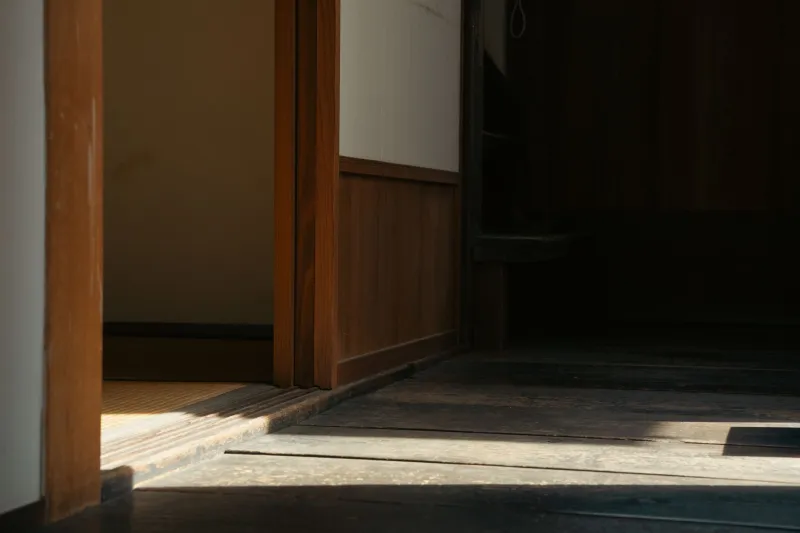
Ma (間) is a Japanese term that translates loosely as "interval," "gap," or "pause" — but these translations fail to capture its full meaning. In Japanese thought, ma is not an absence. It is a presence. It is the meaningful space between notes that gives music its shape, the silence between words that gives conversation its depth, the empty room that gives architecture its breath.
In traditional Japanese healing arts, ma is understood as a physiological necessity. The body and mind require intervals — genuine pauses between stimuli — in order to process, integrate, and restore. Without these intervals, the nervous system cannot complete its natural cycles of activation and recovery. It remains in a state of perpetual readiness, consuming resources it was never designed to sustain indefinitely.
This understanding predates modern neuroscience by centuries. Yet what Japanese practitioners observed through clinical experience and philosophical reflection, contemporary researchers are now confirming through neuroimaging and psychophysiological measurement.
Notification Fatigue as a Nervous System Condition
Notification fatigue is often dismissed as a lifestyle inconvenience — something to be managed with better phone habits or a weekend digital detox. But for a growing number of patients, it represents something more clinically significant: a chronic dysregulation of the autonomic nervous system.
The autonomic nervous system governs the body's involuntary functions — heart rate, digestion, respiration, hormonal release — and operates through two primary branches. The sympathetic branch activates the body for action; the parasympathetic branch restores it to rest. In a healthy system, these branches alternate in a dynamic, responsive rhythm. Activation is followed by recovery. Effort is followed by ease.
Constant notification exposure disrupts this rhythm. Each alert activates the sympathetic branch. If recovery is never allowed to complete — because the next alert arrives before the nervous system has returned to baseline — the system gradually loses its capacity to downregulate. Patients in this state are not simply tired. They are physiologically unable to rest, even when external conditions permit it.
This is the clinical reality that the concept of ma helps us name and address.
Ma in Clinical Practice
At Nishino Central Wellness, integrating the principle of ma into patient care does not mean prescribing meditation apps or recommending social media breaks — though both may have their place. It means addressing the nervous system directly, through therapeutic modalities that are specifically designed to restore the parasympathetic capacity that chronic stimulation erodes.
Acupuncture, for instance, has a well-documented effect on autonomic nervous system regulation. Clinical studies have demonstrated that acupuncture stimulation — particularly at points associated with the vagus nerve pathway — can measurably shift the body from sympathetic dominance toward parasympathetic recovery. In the language of ma, acupuncture creates the interval the nervous system has been denied.
Shiatsu bodywork operates through a similar mechanism. The sustained, rhythmic pressure of shiatsu therapy encourages the body to release its held tension, slow its breath, and enter the kind of deep parasympathetic state that notification-fatigued patients often describe as their first genuine rest in months. Many patients report that a single shiatsu session produces a quality of relaxation they have been unable to achieve through sleep alone.
Kampo herbal formulas also have a role to play. Several classical formulas have been used for centuries to address what traditional Japanese medicine calls shinki — disturbances of the heart spirit characterized by anxiety, racing thoughts, insomnia, and emotional volatility. These presentations map closely onto what modern clinicians identify as the psychological sequelae of chronic notification stress.
Reclaiming the Interval
Beyond clinical treatment, the philosophy of ma offers patients a new way of understanding their relationship with time and stimulation. In a culture that has come to equate productivity with constant engagement, the idea that emptiness is not waste — that the pause is as essential as the signal — can be genuinely transformative.
Practical applications of ma thinking include what we might call "interval architecture": deliberately structuring the day with genuine pauses between activities, rather than filling every transitional moment with a screen. It means allowing a meal to be only a meal, a walk to be only a walk, and a conversation to be only a conversation — without the background hum of notifications competing for the nervous system's attention.
This is not nostalgia for a pre-digital age. It is a clinically informed recognition that the nervous system requires intervals to function, and that providing those intervals is a fundamental act of healthcare.
Silence as a Clinical Tool
Japanese healing traditions have always understood that what is not done is as important as what is done. The practitioner who knows when to pause, when to allow the body to settle, when to offer stillness rather than stimulation — this is a practitioner who understands the body's deepest needs.
At Nishino Central Wellness, we bring this understanding to every patient encounter. If you are experiencing the symptoms of notification fatigue — persistent anxiety, disrupted sleep, difficulty concentrating, or a sense of being perpetually overwhelmed — we invite you to explore what integrative care, informed by the wisdom of ma, might offer you.
Sometimes, the most powerful medicine is a well-placed pause.