The Breath You Forgot You Had: Reclaiming Diaphragmatic Function Through Classical Japanese Breathing Traditions
An Invisible Dysfunction
If you asked the average American whether they knew how to breathe, the question would seem absurd. Of course they know how to breathe. They have been doing it without interruption for their entire lives.
But knowing how to breathe and breathing well are not the same thing. And for a significant portion of the American adult population — particularly those who sit for long hours, carry chronic stress, or have spent years in the kind of postural collapse that desk culture produces — the mechanics of breathing have drifted far from their functional baseline without anyone noticing.
The consequences are not trivial. Dysfunctional breathing patterns are associated with elevated cortisol, increased pain sensitivity, impaired sleep, reduced athletic performance, and a nervous system that spends far too much of its time in sympathetic overdrive. The fix, according to both contemporary respiratory research and centuries of Japanese clinical and martial tradition, begins with the diaphragm.
How Breathing Gets Unlearned
Infants breathe diaphragmatically by default. Watch a sleeping baby and you will see the abdomen rise and fall with each breath — not the chest. This is the body's original respiratory pattern, mechanically efficient and neurologically calming.
Somewhere between infancy and adulthood, most Americans lose it. The transition is gradual and multifactorial. Prolonged sitting compresses the abdominal cavity, making diaphragmatic descent mechanically harder. Chronic stress triggers a protective thoracic breathing pattern — shallow, rapid chest breathing that activates the sympathetic nervous system even in the absence of actual threat. Cultural aesthetics that prize a flat stomach lead people to habitually hold the abdomen in, physically preventing the diaphragm from dropping on inhalation.
The result is a population of chest breathers — people whose primary respiratory muscle has been functionally sidelined and replaced by accessory muscles in the neck, shoulders, and upper chest. These muscles were designed for emergency respiratory demand, not continuous use. Their chronic recruitment contributes directly to the neck tension, upper trapezius pain, and headache patterns that fill American physical therapy waiting rooms.
What Japanese Traditions Preserved
The irony is that the correct breathing pattern never became a mystery in Japan. It was preserved — actively, deliberately — across multiple cultural and clinical lineages that treated breath not as an incidental biological function but as a primary instrument of health and performance.
In the martial arts traditions of judo, kendo, and aikido, breath control is taught from the first day of training. The concept of kokyu — often translated as breath power — describes the integration of respiratory mechanics with whole-body movement and force generation. Practitioners learn to breathe from the tanden, the energy center located approximately three finger-widths below the navel, which corresponds anatomically to the lower abdominal region activated by full diaphragmatic breathing.
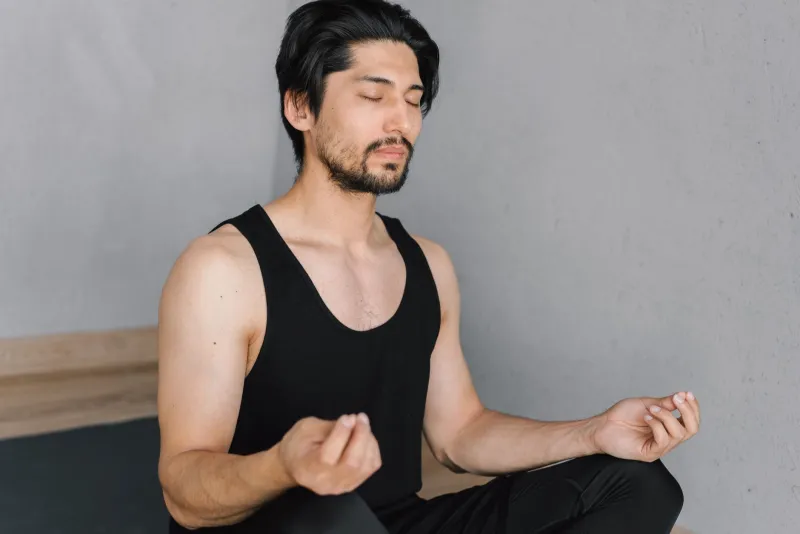
In Zen Buddhist practice, zazen meditation is inseparable from breath instruction. Practitioners are taught to breathe slowly and deeply into the lower abdomen, extending the exhalation to promote parasympathetic activation. This practice, refined over more than a thousand years of Japanese monastic tradition, anticipates by centuries what neuroscientists now describe as vagal nerve stimulation through controlled exhalation.
In Japanese therapeutic traditions, breath assessment is integrated into clinical evaluation. A patient who presents with shallow thoracic breathing is understood to be in a state of systemic tension that will limit the effectiveness of any other treatment. Breath restoration is often the first intervention, not an afterthought.
The Neuroscience of What Japan Already Knew
Contemporary research has produced a detailed mechanistic account of why diaphragmatic breathing works. The diaphragm's movement during full breathing stimulates baroreceptors in the thorax and abdomen, which communicate with the brainstem to regulate heart rate variability. Slow, deep breathing — particularly with an extended exhalation — activates the vagus nerve, the primary conductor of parasympathetic nervous system function.
The parasympathetic state is not merely relaxation. It is the physiological condition in which tissue repair occurs, immune function is optimized, digestive processes operate efficiently, and pain perception is modulated downward. Chronic sympathetic dominance — the state produced by shallow chest breathing — suppresses all of these functions simultaneously.
Researchers studying the specific breathing patterns used in Japanese martial and meditative traditions have found respiratory rates that consistently fall between four and six breaths per minute — significantly slower than the typical American adult rate of twelve to eighteen breaths per minute. At these slower rates, heart rate variability increases substantially, a marker of autonomic nervous system flexibility that correlates with reduced cardiovascular risk, improved emotional regulation, and lower chronic pain scores.
Practical Reconstruction
Restoring diaphragmatic breathing in someone who has breathed thoracically for decades requires more than instruction. It requires retraining both the mechanical pathway and the neurological pattern that governs it.
Japanese breathing rehabilitation, as practiced in therapeutic contexts, typically begins with body position. Lying supine with knees bent removes the compressive forces of sitting and allows the diaphragm to move freely. Patients are guided to place one hand on the chest and one on the lower abdomen and to practice directing the breath so that only the lower hand rises. This seems simple. For habitual chest breathers, it is initially nearly impossible.
Progression moves through seated practice, then standing, then integration with movement — mirroring the pedagogical sequence used in martial arts training. The goal is not a breathing exercise performed once daily but a new default respiratory pattern that operates continuously.
For athletes, the performance implications are significant. Diaphragmatic breathing improves core stability — the diaphragm is a primary component of the deep core pressure system, working in coordination with the pelvic floor and deep abdominals. Restoration of proper diaphragmatic function has been shown to improve lumbar stability, reduce injury risk, and enhance force transfer through the kinetic chain. Japanese martial artists understood this relationship intuitively. Exercise physiologists have now confirmed it experimentally.
Starting Where You Are
The breath is the one physiological system that operates both automatically and voluntarily. This dual nature makes it uniquely accessible as a therapeutic target. Unlike heart rate or digestive function, breathing can be consciously directed — and through that conscious direction, the entire autonomic nervous system can be influenced.
At Nishino Central Wellness, we regard breath restoration as foundational medicine — not a wellness add-on but a clinical priority for patients managing chronic pain, stress-related conditions, sleep dysfunction, and performance limitations. The techniques we draw upon are not novel inventions. They are refined inheritances from Japanese traditions that never allowed this fundamental human capacity to be forgotten.
Reclaiming the breath you were born with may be the most accessible — and most underestimated — step available to you. It costs nothing. It requires no equipment. It asks only attention, patience, and a willingness to begin again from the most basic place.