Stillness as Medicine: What Japan's Forest Bathing Culture Reveals About America's Rest Deficit
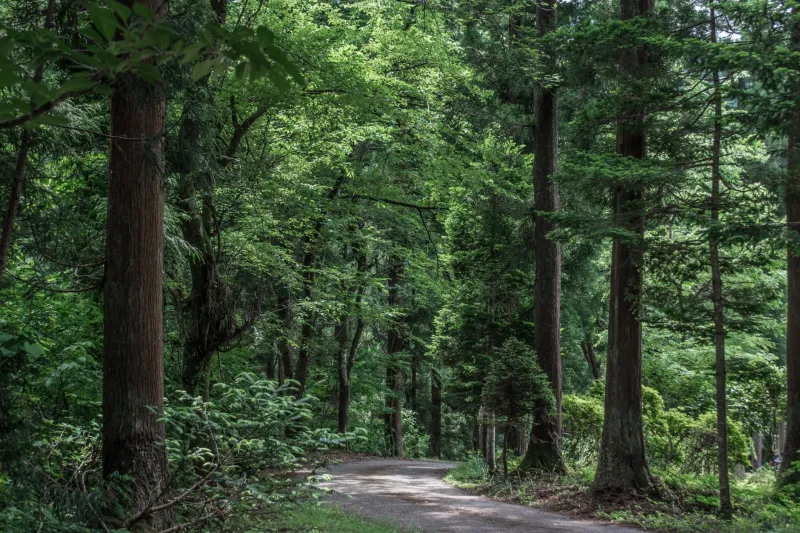
There is a particular kind of exhaustion that no amount of sleep seems to cure. Millions of Americans recognize it — the fatigue that accumulates not from physical labor, but from the ceaseless mental acceleration of modern life. Notifications, deadlines, commutes, and the ambient pressure to always be producing something. In Japan, clinicians have been studying this phenomenon for decades. Their proposed remedy may surprise those conditioned to believe that recovery requires effort: they recommend doing very little, very deliberately.
This is the philosophical and physiological foundation of shinrin-yoku, a term coined by Japan's Ministry of Agriculture, Forestry and Fisheries in 1982. Translated literally as "forest bathing," it describes the practice of immersing oneself in a natural woodland environment — not hiking, not exercising, simply being present. The distinction is medically significant, and understanding it may fundamentally alter how American patients think about recovery.
The Science Behind the Stillness
Japanese researchers, most notably the late Dr. Qing Li of Nippon Medical School, have spent decades quantifying what traditional Japanese culture long accepted intuitively: that time spent in natural settings produces measurable biological change. Studies conducted across Japan's designated forest therapy trails — a network of over 60 certified sites — have documented consistent reductions in salivary cortisol levels, lower blood pressure readings, decreased pulse rate, and suppressed concentrations of adrenaline and noradrenaline in the urine of participants who spent even two hours walking slowly through forested areas.
Perhaps most striking is the immunological data. Exposure to phytoncides — the airborne compounds released by trees, particularly conifers — has been shown to increase the activity of natural killer (NK) cells, a class of white blood cells central to the body's immune surveillance. In one landmark study, the NK cell enhancement observed after a three-day forest immersion persisted for more than 30 days afterward. This is not anecdotal wellness culture. This is peer-reviewed physiology.
Inflammatory markers, too, respond to structured stillness. Elevated C-reactive protein and interleukin-6 — both associated with chronic stress — show measurable decline following shinrin-yoku sessions when compared to equivalent time spent in urban environments. For American patients managing conditions influenced by chronic inflammation, from cardiovascular disease to autoimmune disorders, these findings carry genuine clinical weight.
A Culture That Prescribes Rest
What distinguishes Japan's approach is not merely the existence of these practices, but their institutionalization. The Japanese government formally recognized forest therapy as a health intervention in 2004, establishing the Forest Therapy Society and funding research to certify specific trails based on their therapeutic properties. Physicians in Japan can, and do, recommend shinrin-yoku to patients dealing with hypertension, burnout, and anxiety. Rest, in this framework, is not the absence of productivity — it is a clinical prescription.
This stands in stark contrast to the prevailing American narrative, in which busyness functions as a status symbol and rest is frequently coded as weakness or indulgence. The United States remains one of the few developed nations without federally mandated paid vacation time, and surveys consistently show that American workers leave a significant portion of their earned leave unused. The cultural message is clear: stopping is suspect.
Yet the body does not recognize productivity culture as a valid reason to suppress its stress response. Cortisol does not negotiate with ambition. Over time, chronically elevated stress hormones degrade cardiovascular function, impair immune response, disrupt sleep architecture, and accelerate cellular aging. The American glorification of relentless output is, from a physiological standpoint, a form of slow attrition.
Structured Rest Without a Forest
For many Americans, a certified Japanese forest therapy trail is not a realistic weekly option. But the core mechanisms of shinrin-yoku — sensory deceleration, reduced cognitive load, parasympathetic nervous system activation — can be cultivated through accessible alternatives when approached with intention.
Urban green spaces, engaged differently. Most American cities contain parks that, when visited without a phone and without a destination, can approximate the attentional rest that forest environments provide. The key is duration and deliberateness. Twenty minutes of aimless, screen-free walking through a tree-lined environment has been shown in multiple studies to reduce rumination and lower prefrontal cortex activity associated with stress.
Scheduled decompression windows. Japanese workplace culture, for all its known pressures, also contains formal traditions of rest — the concept of inemuri, or restorative micro-sleep, and mandated lunch breaks that are genuinely observed. American patients can begin reclaiming similar intervals by treating a 15-minute midday rest as a non-negotiable appointment rather than a luxury.
Sensory reduction at home. Shinrin-yoku works in part because natural environments reduce the sensory overload of modern life. Patients who cannot access green space can create meaningful approximations through timed periods of silence, the use of nature soundscapes at low volume, and the deliberate removal of screens from designated rest areas in the home.
Breathwork as a parasympathetic anchor. The slow, unforced breathing that naturally accompanies a forest walk is itself a therapeutic mechanism. Diaphragmatic breathing exercises, practiced for as little as five minutes twice daily, have demonstrated reductions in cortisol and improvements in heart rate variability comparable to mild environmental interventions.
Reframing Rest as a Clinical Priority
At Nishino Central Wellness, we view the body as an integrated system in which restoration is not optional maintenance — it is essential function. Japanese healing traditions have never separated mental stillness from physical health, recognizing long before Western medicine formalized the mind-body connection that a nervous system in chronic overdrive cannot heal efficiently, regardless of the interventions applied to it.
The evidence from Japanese forest therapy research does not ask American patients to abandon their ambitions. It asks them to recognize that the body's capacity for sustained performance depends entirely on its capacity for genuine recovery. Shinrin-yoku, at its core, is not a retreat from productivity. It is the biological prerequisite for it.
For patients navigating chronic stress, pain conditions, immune challenges, or the cumulative weight of modern American life, structured rest is no longer a soft recommendation. Increasingly, it is a clinical one. The question is not whether Americans can afford to rest. The science from Japan suggests, quite clearly, that they cannot afford not to.